


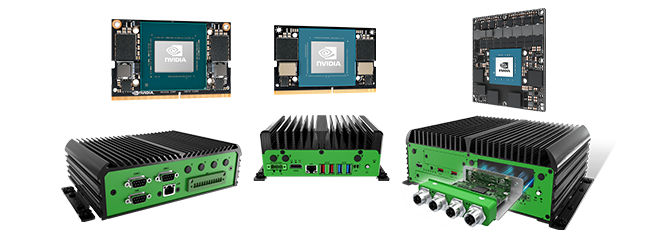

Modern warehouse automation increasingly relies on autonomous mobile robots to move goods with speed, precision, and intelligence. To support real time navigation, sensor fusion, and fleet level communication, a robotics developer required a compact yet powerful computing solution capable of operating reliably within mobile robotic systems. Premio’s rugged modular fanless embedded computer delivered the processing performance, flexible I/O expansion, and industrial durability needed to power next generation AMR deployments in smart warehouse environments.
Challenges
- Real time navigation and sensor fusion workloads demanded more processing performance than the previous onboard computing platform could deliver
- Multiple sensors, motor controllers, and communication modules required broader connectivity within the robotic system
- The robot’s compact chassis left limited space for traditional industrial computing hardware
- Continuous movement and vibration inside mobile robots required secure and stable mounting for the embedded system
- Deployment in warehouse environments required UL listed hardware to meet industrial safety standards
Solution
- Premio’s ultra compact rugged embedded computer (RCO-1000-ASL-20)
- Intel Atom x7835RE processor with up to 32GB 5600 MT/s DDR5 memory for real time navigation and robotic control
- Comprehensive connectivity including dual 2.5GbE LAN, RS-232/422/485, USB, and CAN Bus for seamless sensor and controller integration
- Modular expansion with two EDGEBoost I/O brackets allowing flexible customization for robotics peripherals and industrial devices
- Out-of-band management and power ignition support enabling remote monitoring, maintenance, and vehicle level power control
- MIL-STD-810H design and UL Listed certification ensuring durability and compliance for industrial warehouse deployments
Benefit
- Local Engineering Support in the United States
Company Overview
A robotics technology company focused on warehouse automation develops autonomous mobile robots that help streamline material movement inside modern fulfillment centers. Its solutions combine intelligent navigation, real time data processing, and fleet management software to improve efficiency across warehouse operations. By continuing to advance robotics and automation technologies, the company supports the growing need for faster and more intelligent logistics systems.
The Challenges
Real Time Processing for Autonomous Navigation
Autonomous mobile robots constantly process data from cameras, LiDAR, and navigation sensors as they move through busy warehouse environments. To keep navigation accurate and responsive, the robotics system required a processor capable of handling these workloads directly at the edge without delays. At the same time, the computing platform needed to deliver this performance within a compact, low power system suitable for integration inside the robot.
Limited Connectivity for Sensors and Controllers
Each robot brings together a range of components such as navigation sensors, motor controllers, safety systems, and communication modules. To connect all of these devices, the developer needed a computing platform with the right mix of I/O interfaces. Without sufficient connectivity, adding new sensors or expanding system capabilities would become difficult as the robotics platform evolves.
Space Constrained Robotic System Design
Autonomous robots are designed with tightly integrated hardware to preserve mobility and maximize payload capacity. Because of this limited internal space, the computing system needed to fit inside a compact robotic chassis while still managing heat effectively. Traditional desktop or fan based systems were too bulky and could introduce reliability issues during continuous robot operation.
Mounting Reliability in Constant Motion
Warehouse robots are constantly in motion as they transport goods across large facilities. Because of this continuous movement and vibration, the embedded computer needed a secure mounting solution that could hold up over time. A stable installation was important to keep the system reliable and operating without interruptions.
Compliance with Industrial Safety Requirements
Warehouse automation systems often need hardware that meets strict industrial safety standards. To deploy its robots in commercial facilities, the developer required an embedded computer that could meet these certification requirements. Having a UL listed system helped ensure the platform was ready for safe and reliable large scale deployment.
The Solution
Premio’s super rugged modular fanless computer (RCO-1000-ASL-20)
The RCO-1000-ASL solution is an ultra compact embedded computer designed for rugged edge deployments. Its modular EDGEBoost I/O architecture supports up to three I/O expansion brackets, allowing system integrators to customize connectivity based on specific application needs. Built with a fanless and cableless design, the solution supports wide operating temperatures and a wide 9 to 36VDC power input with protection features such as over voltage protection, making it well suited for demanding industrial environments.
Intel Atom x7835RE Processing with High Speed DDR5 Memory
The RCO-1000-ASL solution is powered by the Intel Atom x7835RE processor with eight cores, delivering efficient multi core performance for robotics applications. As part of Intel’s embedded roadmap, the processor also supports a ten year lifecycle, helping ensure long term availability for industrial deployments. With support for up to 32GB of high speed 5600 MT/s DDR5 memory, the RCO-1000-ASL can handle real time processing for navigation data, sensor inputs, and robotic control tasks, allowing autonomous robots to analyze their surroundings and respond quickly during operation.
Comprehensive Connectivity for Sensors and Controllers
Autonomous mobile robots rely on multiple sensors and control systems that must communicate reliably with the onboard computer. The RCO-1000-ASL provides extensive connectivity including dual 2.5GbE LAN, RS-232/422/485 serial interfaces, USB ports, and CAN Bus for vehicle communication. It also supports wireless connectivity with dual SIM for 5G along with WiFi and Bluetooth, making it easier to connect robots with fleet management systems and warehouse networks.
Modular Expansion with EDGEBoost I/O

To support different robotics requirements, the RCO-1000-ASL solution features modular EDGEBoost I/O expansion. Depending on the configuration, the RCO-1000-ASL-10 supports one EDGEBoost bracket, the RCO-1000-ASL-20 supports two, and the RCO-1000-ASL-30 supports up to three brackets for additional I/O expansion. Available modules include options such as additional COM ports, four USB ports, DisplayPort with isolated digital I/O, and HDMI with isolated digital I/O, allowing system integrators to customize connectivity for sensors, controllers, and other robotics peripherals.
Out-of-Band Management and Power Ignition Support
Out-of-band management allows operators to remotely monitor and maintain computers installed across robotic fleets. This makes it easier to troubleshoot issues or perform maintenance without needing to physically access each robot. Power ignition support also allows the RCO-1000-ASL to start up and shut down in sync with the robot’s power system.
MIL-STD-810H Rugged Design and UL Listed Certification
Autonomous robots often operate for long hours in environments where vibration and temperature changes can put stress on electronic hardware. The RCO-1000-ASL is designed to meet MIL-STD-810H and is UL Listed, helping ensure it can handle these demanding industrial conditions. These certifications provide added confidence that the solution can deliver reliable performance in warehouse automation deployments.
The Benefit
Local Engineering Support in the United States
With headquarters located in Los Angeles, Premio provides responsive engineering and technical support within the United States. This proximity allows customers to receive faster assistance during development, integration, and deployment. Access to local engineering expertise helps system integrators accelerate project timelines and resolve technical challenges more efficiently.
Conclusion
As warehouse automation continues to advance, reliable edge computing plays a critical role in enabling intelligent robotic operations. With its rugged design, modular expansion capabilities, and strong connectivity, the RCO-1000-ASL helps power autonomous mobile robots that keep modern warehouses running efficiently. For more information about the RCO-1000-ASL or other rugged edge computing solutions, please contact sales@premioinc.com.